Not every fabrication project starts with a CAD file or a detailed set of engineering drawings. Sometimes it starts with a piece of paper, a few dimensions, and an idea of what the customer needs.
That’s exactly how this project came to Pottsies Fabrication.
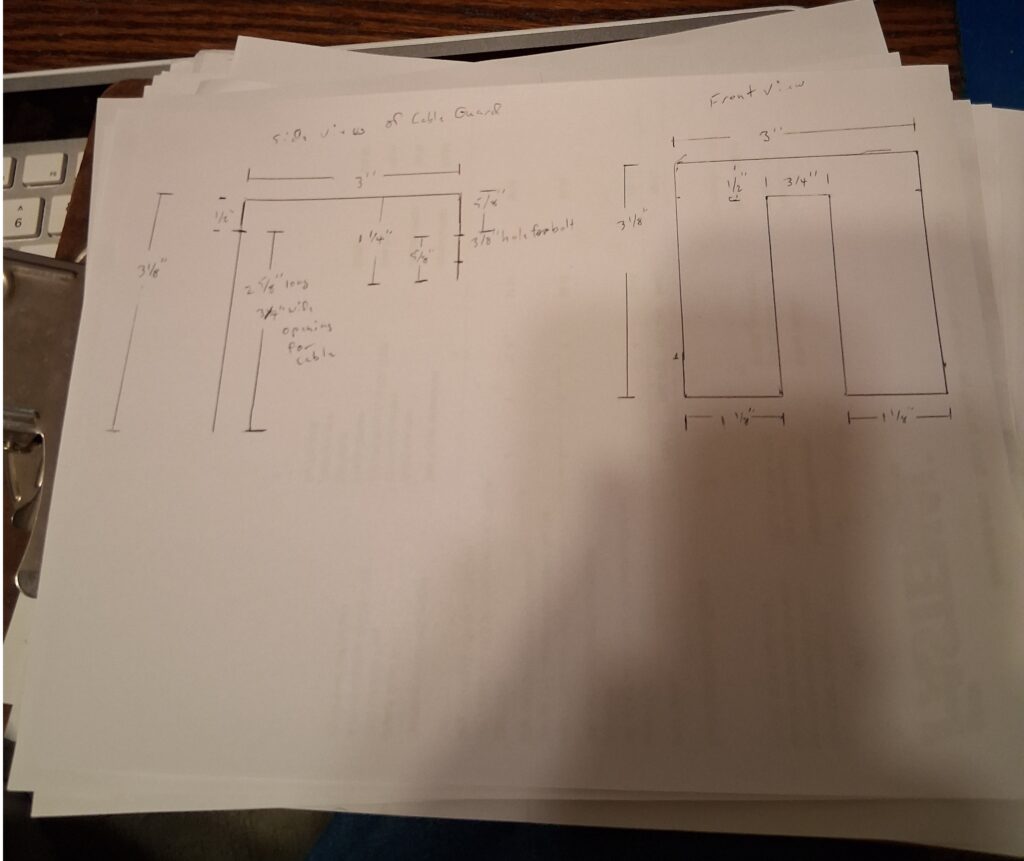
A customer needed a custom stainless steel cable guard and brought us a hand-drawn sketch showing the basic shape, dimensions, mounting location, and clearance needed for the cables.
It didn’t need to be a perfect drawing. It gave us the information we needed to take the next step.
From Sketch to CAD
Using the customer’s sketch and dimensions, we recreated the part in CAD and worked out the finished dimensions, bend locations, cutouts, and mounting hole.
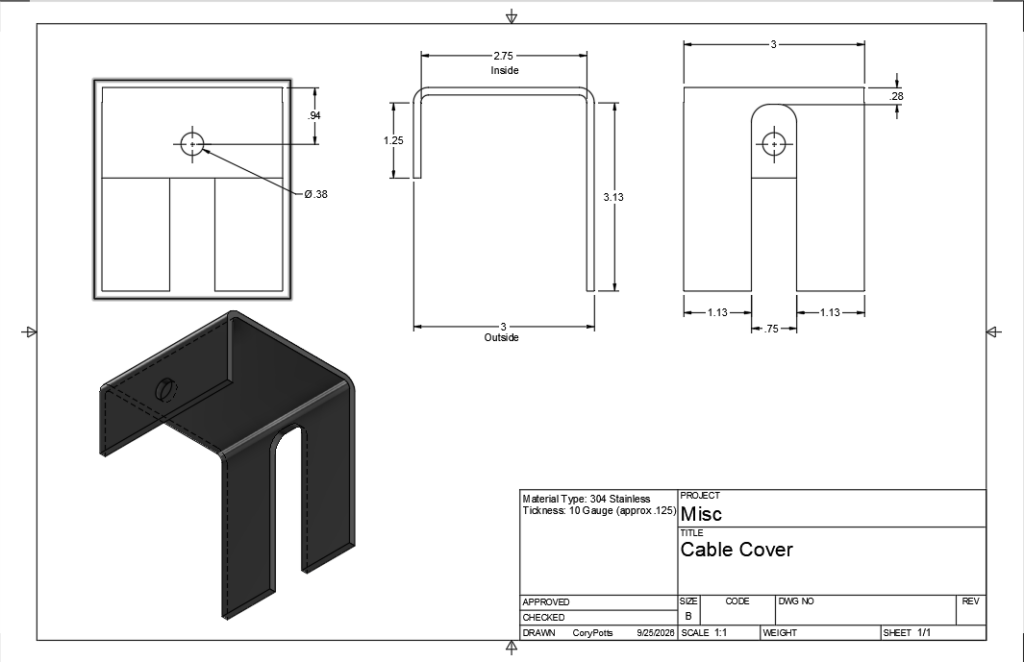
Before cutting any material, we sent the finished drawing back to the customer for approval. This gave them a chance to verify the design and dimensions before we started fabrication.
Once we had the go-ahead, it was time to turn the drawing into a physical part.
Cutting the Part
The cable guard was made from 10-gauge 304 stainless steel. Using the CAD design, we created the flat pattern and cut the part on our CNC plasma table.
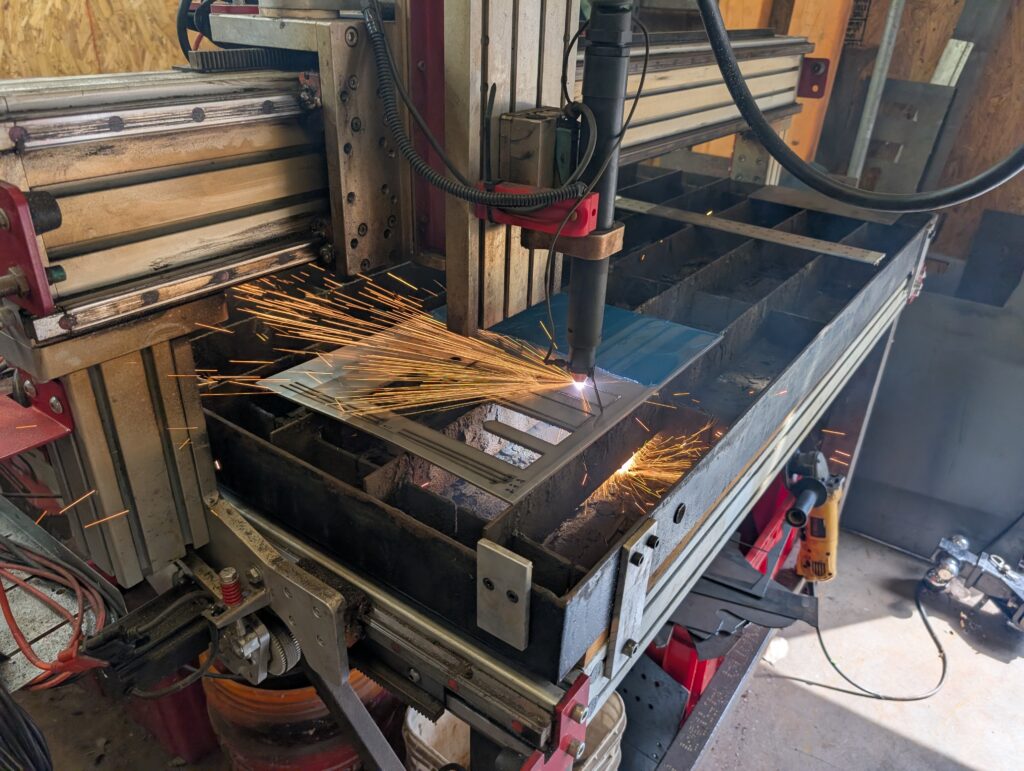
The plasma table allowed us to cut the overall profile, cable opening, mounting hole, and other features directly from the CAD design.
After cutting, we had a flat blank ready to be formed.
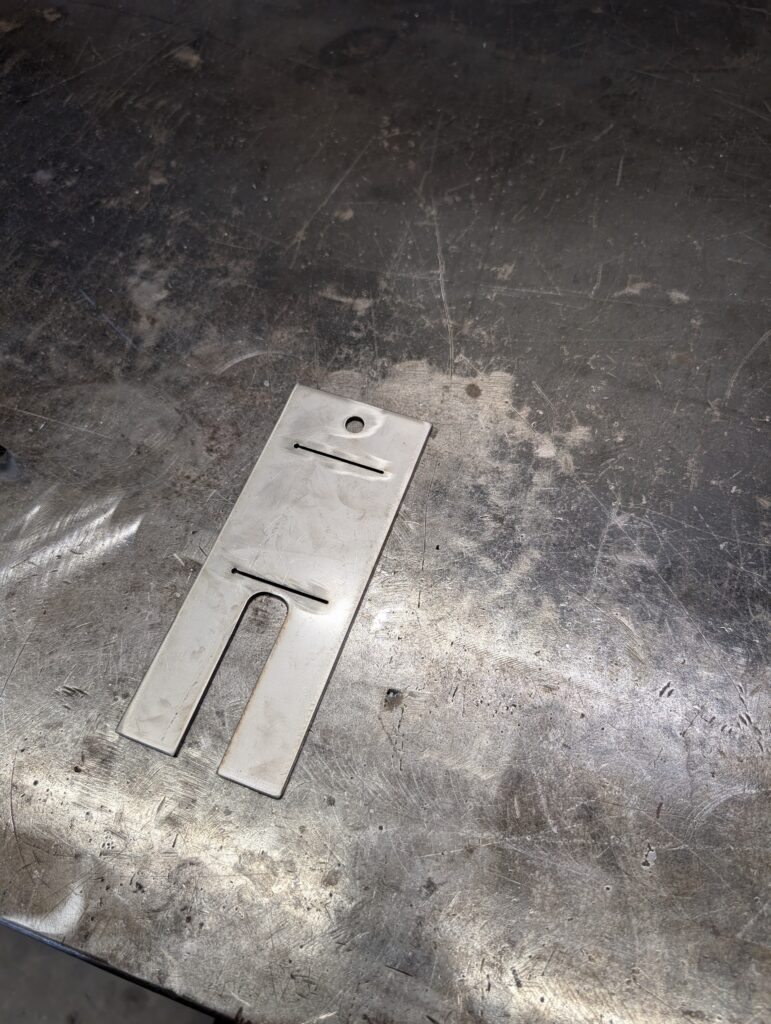
At this stage, you can really see the transition from a drawing on a computer screen to an actual piece of stainless steel.
Forming the Cable Guard
Next, the flat blank went to the brake.
The bends were made according to the dimensions established during the CAD process, transforming the flat piece of stainless into the three-dimensional shape the customer needed.
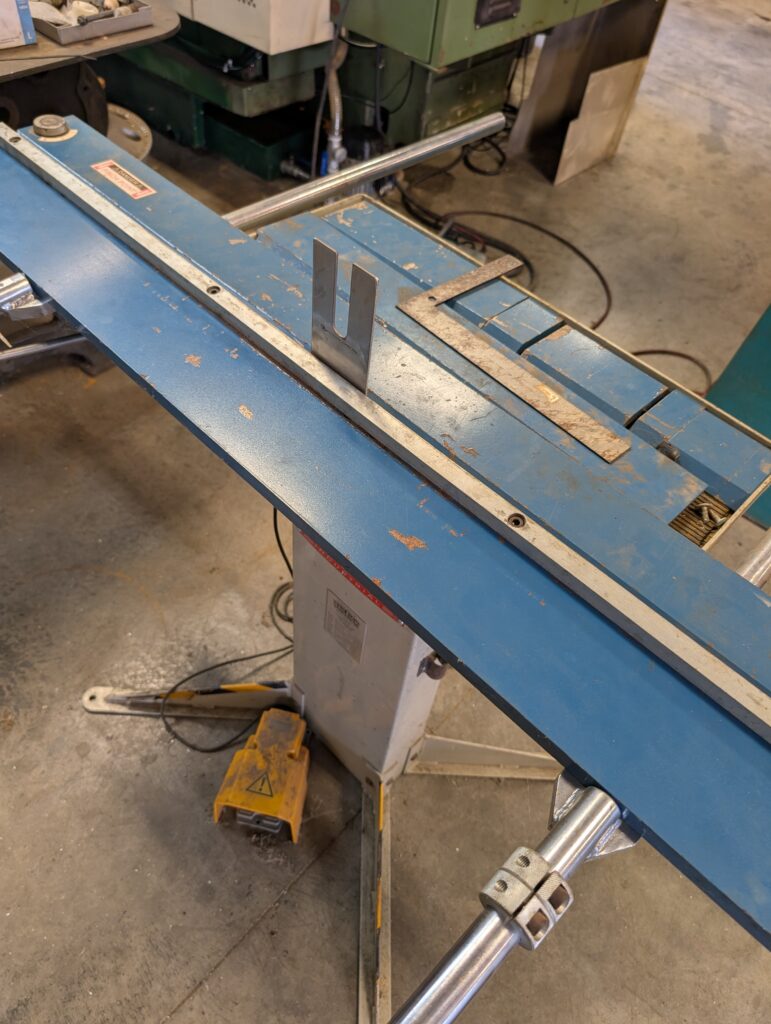
This is one of those steps that shows why planning the part in CAD first is so useful. The flat pattern, bend locations, and finished dimensions all have to work together for the completed part to come out correctly.
TIG Welding and Final Fabrication
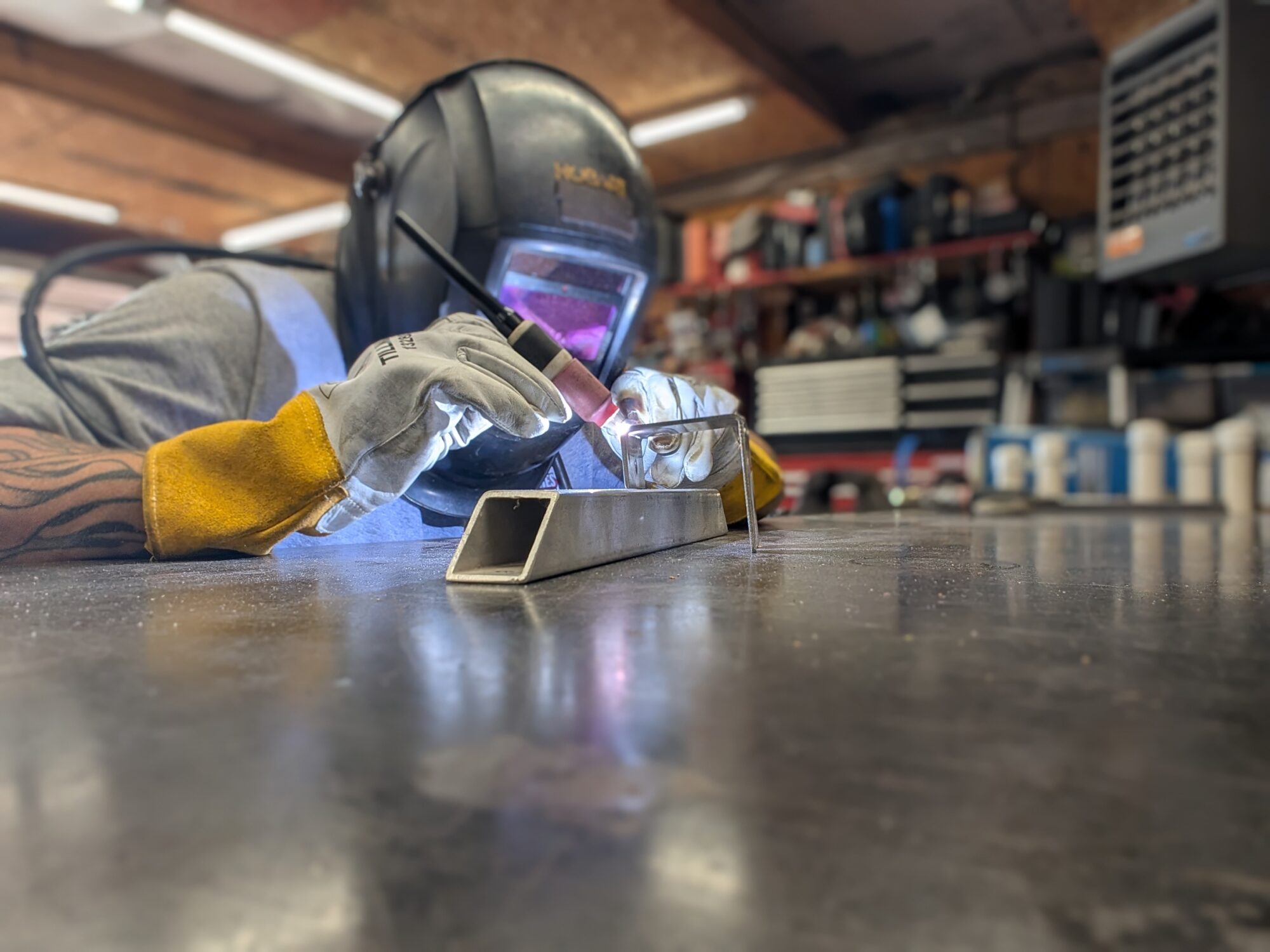
Once the forming was complete, the remaining fabrication work was finished with TIG welding.
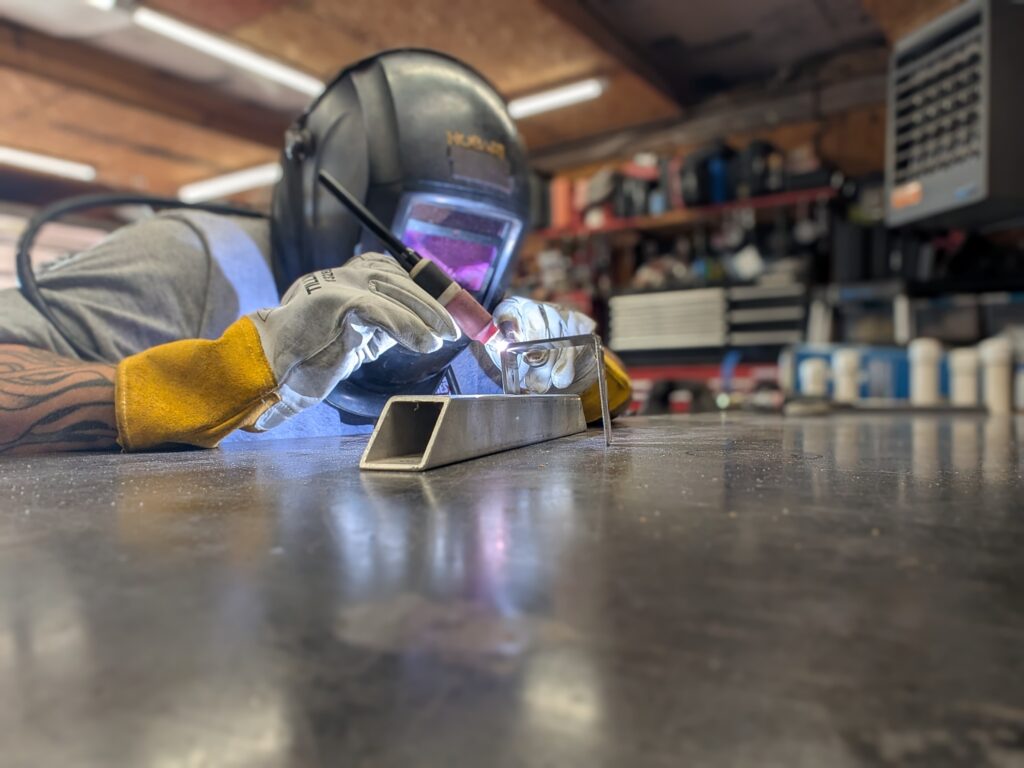
After welding, the part was cleaned up and checked before being prepared for delivery.
From a Piece of Paper to a Finished Part
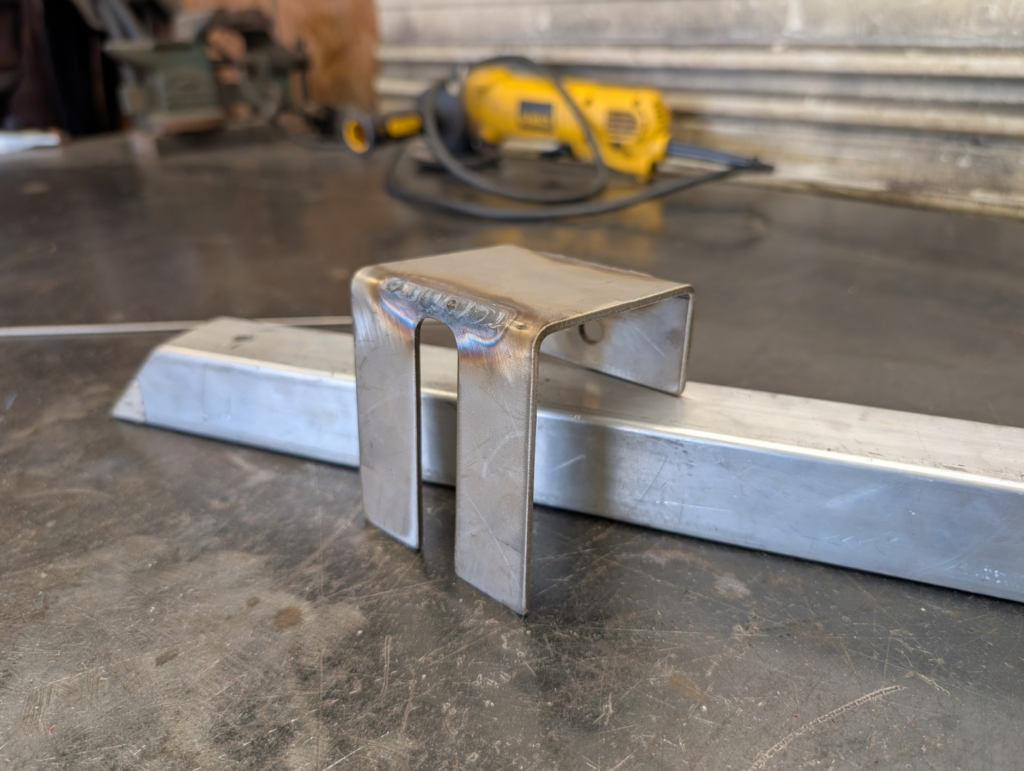
From receiving the customer’s original hand sketch to CAD design, customer approval, cutting, forming, welding, and final delivery, the entire project was completed in two days.
And perhaps the best indication that the finished part did exactly what the customer needed?
They came back and ordered another one.
Have an Idea but No CAD Drawing?
One of the things we want customers to know is that you don’t need a production-ready CAD file to have a custom part made.
Maybe you have a hand-drawn sketch like this customer did. Maybe you have an existing part that needs to be reproduced. Maybe you have a few measurements and an idea in your head of what you need.
That’s enough to start a conversation.
Pottsies Fabrication can help take that idea from concept → CAD → approval → fabrication → finished part.
Whether it’s a one-off custom piece, prototype, replacement part, or small production run, we’re happy to take a look at what you need and figure out the best way to make it.
Pottsies Fabrication LLC — Charlestown, Indiana
Manual and CNC Machining • Precision Welding • Fabrication